By Property Management Law Solutions
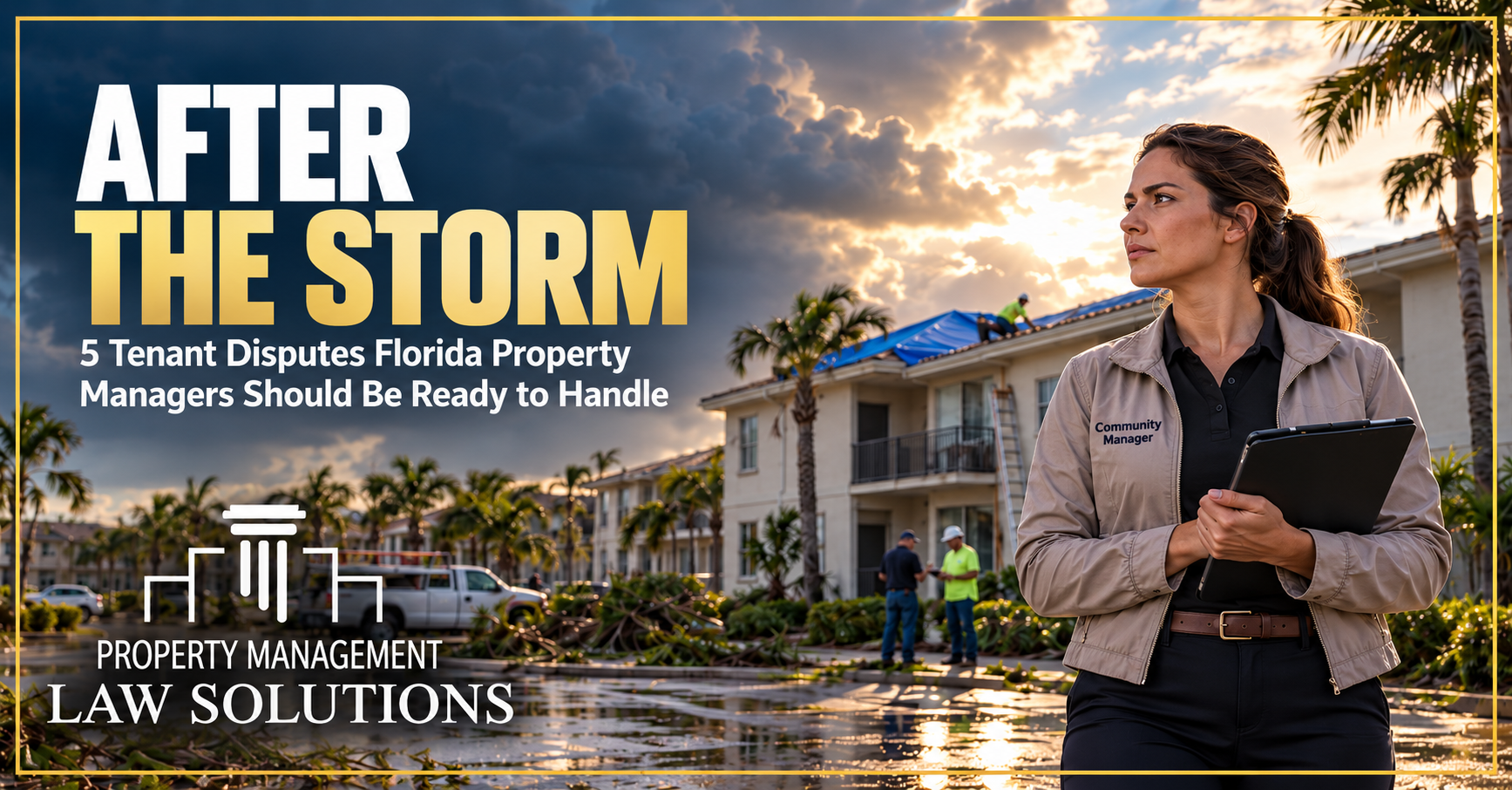
The wind may be gone, but for many Florida property managers, the difficult part of a hurricane can continue long after the storm passes.
Following Hurricane Isaias’ October 9 landfall near Destin, rental communities across Northwest Florida have faced damaged roofs, water intrusion, flooding, electrical outages, and repair schedules complicated by insurance claims and contractor availability.
Those conditions can quickly create five recurring areas of conflict between landlords and residents: disputes over rent, repairs, access, lease termination, and responsibility for losses after move-out.
Florida law provides rights and responsibilities for both landlords and tenants after casualty damage. For property managers, the challenge is understanding which rules apply while documenting decisions well enough to defend them later.
“After a hurricane, property managers are often making dozens of decisions at once, and many of those decisions can have legal consequences,” said Tim Baldwin, managing attorney at Property Management Law Solutions. “The goal is to stabilize the property, understand exactly what was damaged, and avoid making assumptions about rent, repairs, or lease termination before the facts are clear.”
1. Rent Reductions and Withheld Rent
One of the first disputes after a storm is often whether the tenant still owes the full amount of rent.
A resident may demand an entire month’s credit because electricity was unavailable for several days. Another may withhold a portion of the rent because one bedroom suffered water damage. Others may request reimbursement for hotel stays or temporary accommodations.
Florida Statute § 83.63 addresses casualty damage that substantially impairs a tenant’s enjoyment of the premises. Depending on the circumstances, a tenant may be able to terminate the rental agreement and vacate or leave the damaged portion and receive a rent reduction based on the fair rental value of the unusable area.
That does not mean every interruption eliminates the obligation to pay rent.
Property managers should document which areas were affected, how long they were unusable, whether the resident remained in the home, and when temporary and permanent repairs were completed. Any agreed rent adjustment should be put in writing.
2. Repair, Water Damage, and Mold Disputes
A roof leak can quickly become much more than a maintenance request.
Residents may raise concerns about mold, habitability, damaged belongings, or whether management responded quickly enough to water intrusion.
Florida Statute § 83.51 imposes maintenance obligations on residential landlords, but storm damage does not automatically establish negligence or make a home uninhabitable. Tenants also have responsibilities under § 83.52, including reasonable care of the premises and avoiding conduct that causes or worsens damage.
The management file can become critical if a dispute develops. Photographs, work orders, contractor reports, moisture readings when appropriate, resident communications, and repair timelines can help establish what happened and how management responded.
Insurance delays and contractor shortages should also be documented. Permanent repairs may take time after a major storm, but the record should show that the property manager continued working to address the problem.
3. Tenants Refusing Access for Repairs
Storm repairs often require a steady stream of adjusters, engineers, roofers, remediation companies, electricians, plumbers, and inspectors.
That can create another type of dispute when a resident refuses or repeatedly delays access.
Property managers should make access requests clear and specific. Residents should know who is coming, when they are expected, why access is needed, and what areas of the home must be inspected or repaired. When practical, multiple inspections should be coordinated to reduce unnecessary disruption.
If a tenant refuses access, management should document each request and response rather than arguing informally.
“One of the worst situations is when a tenant later claims the landlord failed to repair a problem, but the file does not clearly show that access was repeatedly requested and denied,” Baldwin said. “Good documentation can be just as important as the repair itself.”
Depending on the circumstances, continued refusal of lawful access may require a formal notice to cure.
4. Lease Termination After Major Storm Damage
Some properties cannot reasonably remain occupied while major repairs are underway.
Under § 83.63, casualty damage that substantially impairs enjoyment of the premises can give a tenant the right to terminate the lease and immediately vacate. Other termination rights may depend on the nature of the problem, the notice provided, and the language of the lease.
Landlords may also need to consider whether they have grounds to terminate the tenancy because of the extent of the casualty damage.
Before agreeing to or demanding termination, management should determine whether the entire dwelling is unusable or only part of it, whether the resident caused or contributed to the damage, what repairs are necessary, and what the lease says about casualty, repairs, relocation, and termination.
If both sides agree to end the tenancy, the agreement should be put in writing.
5. Security Deposits and Personal Property Claims
The final dispute may not arise until the resident moves out.
Storm-related move-outs can lead to disagreements over security deposits, unpaid rent, furniture and electronics damaged by water, and whether particular damage was caused by the storm or by the resident.
A hurricane does not automatically determine who is responsible for every loss. Property managers should review photographs, inspection records, lease documents, repair records, and available insurance information before making deductions or responding to demands for reimbursement.
Florida Statute § 83.49 also continues to govern security-deposit procedures. When the tenancy ends and the resident vacates, the landlord has 15 days to return the deposit if no claim is made or 30 days to provide the required notice of an intended claim.
A Practical Post-Storm Response Plan
The first days after a casualty often determine whether the matter becomes a lawsuit or a manageable repair issue. Florida landlords should use a consistent response process:
- Acknowledge the report. Confirm receipt of the tenant’s complaint in writing.
- Address immediate hazards. Stabilize the property and restrict access to unsafe areas.
- Inspect and document. Create dated photographs, videos, reports, and repair logs.
- Review the lease. Pay particular attention to maintenance, casualty, access, insurance, and termination provisions.
- Communicate the plan. Tell the tenant what is known, what remains under investigation, and when the next update will be provided.
- Separate confirmed facts from estimates. Do not promise a completion date until contractors, permits, materials, and the scope of work are sufficiently established.
- Evaluate rent based on actual loss of use. Distinguish inconvenience, partial loss, and complete untenantability.
- Put every resolution in writing. Document rent credits, temporary arrangements, repair access, or agreed termination terms.
Post-hurricane disputes are easier to manage when the landlord focuses on three questions: Is the property safe? How much of it can the tenant actually use? What do the lease and Florida law require next?
A prompt, organized, and well-documented response gives the landlord the best chance of answering those questions without escalating the dispute.
The Storm Is Only the Beginning
Hurricanes test more than roofs, windows, and drainage systems. They also test property management procedures.
A poorly documented repair complaint, an improvised rent concession, a dispute over contractor access, or an incorrect lease-termination decision can turn storm damage into a legal dispute long after the weather has cleared.
For property managers, the best protection is a disciplined response: address immediate safety concerns, document conditions and communications, understand what the lease and Florida law require, and seek legal guidance before making decisions that may affect rent, possession, or liability.
Property Management Law Solutions, PLLC is a Florida law firm focused on helping property managers, landlords, and housing providers navigate the legal issues that arise in rental communities. PMLS represents hundreds of clients and communities across Florida and is built to make complex landlord-tenant issues easier to understand, faster to address, and more effective to resolve. If your team has questions about lease enforcement, community rules, resident notices, amenity policies, or compliance concerns, PMLS can provide practical legal guidance before small issues become larger legal problems.
This article is provided for general informational purposes only and does not constitute legal advice.
If your property or community is dealing with hurricane-related tenant issues, contact Property Management Law Solutions at 850-857-2463 or visit www.pmlawsolutions.com to speak with our team about your situation.